



The Biden administration could change the federal government's position on cannabis, according to reports regarding plans to allow medical uses of cannabis.
The Drug Enforcement Administration plans to propose reclassifying marijuana under the Controlled Substances Act, according to reports from the Associated Press and NBC News. The news agency cited anonymous sources familiar with the plan.
The plan would not legalize marijuana, but it would reclassify it from a Schedule I drug, which is considered dangerous, addictive and has no medical use, to a Schedule III drug, which can be legally prescribed as a medicine. It turns out.
The historic shift in U.S. drug policy could have repercussions across the country, including North Carolina, one of only 12 states that has not legalized marijuana for recreational or medical use.
Let's take a look at what the DEA's plan means for marijuana legalization in North Carolina.
What does the federal reclassification of marijuana mean for North Carolina residents?
Phil Dixon, a professor at the University of North Carolina School of Government, said the DEA's reclassification of marijuana would have no effect on its legal status in North Carolina.
“This hardly changes the situation on the ground. This does not affect the state's criminal law,” he said Wednesday.
Marijuana is illegal in the Tar Heel State. Dixon said lawmakers would need to pass a bill to legalize the drug, and Gov. Roy Cooper would need to sign the bill to make any changes. Alternatively, if the governor does not sign the bill, both chambers would need a three-fifths majority to override the veto.
Details of the historical movement:The Biden administration plans to make major changes to federal rules regarding marijuana, according to reports.
But if the federal government reclassifies the drug, Dixon said, it would ease restrictions on research into marijuana and marijuana-derived medicines. This could lead to more marijuana research on university campuses and private pharmaceutical companies, he said.
How soon can marijuana dispensaries open in North Carolina?
Dixon said when North Carolinians can open marijuana dispensaries on federal land depends on when the state legalizes marijuana.
While the federal reclassification may provide some momentum to marijuana legalization advocates, the executive action alone won't necessarily mean North Carolinians will be able to shop at dispensaries right away, he said. .
“We don't have dispensaries opening because we don't approve medical marijuana or recreational marijuana,” he said.

Is there a possibility that military cannabis regulations will be relaxed?
Dixon said military installations are on federal property, but the military sets its own rules. He said the federal government's reclassification of marijuana will not affect whether it can be used by military personnel.
Can you buy marijuana in North Carolina?
Marijuana can be purchased at one dispensary located in the mountains of Western North Carolina.
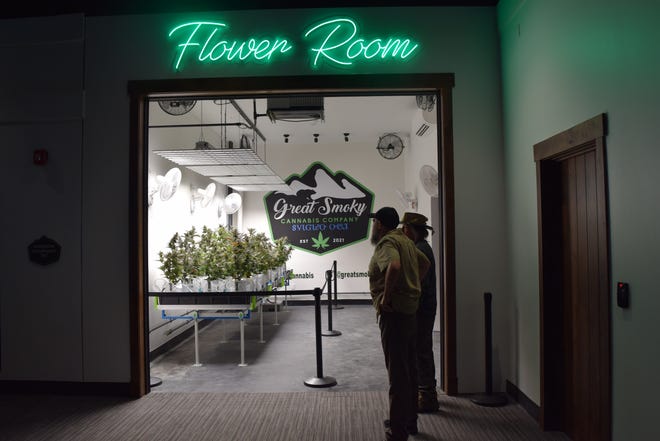
The state's first marijuana dispensary opened in Cherokee on April 20th. The 10,000-square-foot facility is located on Eastern Cherokee Indian land, where medical marijuana is legal under tribal law.
However, the drug remains illegal on state land outside Kuala borders. Possession of marijuana is a misdemeanor and a felony, and can result in a fine of up to $500, one year in jail, or both.
Meanwhile, in the mountains:North Carolina's first dispensary opens April 20, but only for medical marijuana
Great Smoky Cannabis Company can only sell to people with medical marijuana cards issued by EBCI, other tribal entities, or other states.
North Carolina residents with a doctor's medical certification that they have one of the 18 conditions can apply for a medical marijuana card at ebci-ccb.org.

Patients may be eligible for an EBCI medical cannabis card if they meet the following criteria:
- Acquired immunodeficiency syndrome.
- Anxiety disorder.
- Autism spectrum disorder.
- Autoimmune disease.
- Anorexia nervosa.
- cancer.
- Dependence or addiction to opioids.
- Glaucoma.
- Medical conditions associated with human immunodeficiency virus.
- Neuropathic conditions (whether or not such conditions cause seizures).
- Post-traumatic stress disorder.
- Crohn's disease.
- Sickle cell anemia.
- Amyotrophic lateral syndrome.
- Parkinson's disease.
- Conditions that result in a patient receiving hospice care.
- Treatment of a medical condition or condition that causes one or more of the following in certain patients: Muscle spasms, including but not limited to spasms caused by multiple sclerosis. seizures, including but not limited to seizures caused by epilepsy; nausea; or severe or chronic pain.
Has the North Carolina Legislature moved to legalize marijuana?
A bill to legalize medical marijuana in North Carolina passed the Senate last year, but was still being considered in the House when the Legislature adjourned in late October.
Last year's bill details:State Senate approves medical marijuana bill, the Compassionate Care Act
If passed, the Compassionate Care Act would create one of the strictest medical marijuana programs in the country, Dixon said. The bill strictly defines where marijuana can be grown, sold and smoked, and what makes a patient eligible for a medical marijuana card.
Reporter Taylor Shook can be reached at tshook@gannett.com.
