



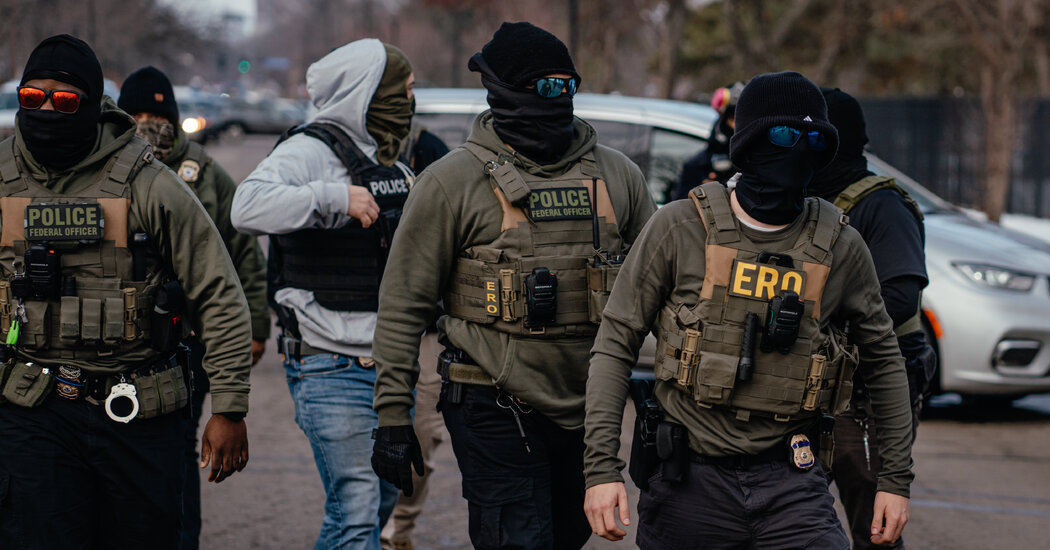
Top immigration officials are scheduled to testify at a Congressional hearing on Tuesday, where they are likely to face pointed questions about the Trump administration's aggressive enforcement efforts in Minnesota.
The heads of Immigration and Customs Enforcement, Customs and Border Protection, and Citizenship and Immigration Services are scheduled to testify. The hearing comes more than two months after the Trump administration launched a crackdown on immigration in Minneapolis and St. Paul. In the Paul area, there was criticism after the sweep of people with no criminal records and the shooting death of two Americans.
The hearing also came as lawmakers were negotiating what restrictions to impose on immigration operations. Democrats have said they do not support any legislation that would fund the Department of Homeland Security unless it imposes new restrictions and guardrails on federal immigration agents, a position reinforced after federal agents killed intensive care nurse Alex Pretti on Jan. 24.
Lawmakers have been deadlocked for weeks over negotiations, with Republicans rejecting most Democratic demands. If Congress doesn't reach an agreement, funding for the department will expire on Saturday.
Rep. Andrew Garbarino, a New York Republican and chairman of the House Homeland Security Committee, formally asked immigration officials to testify shortly after Mr. Preti's murder. His death came about two weeks after ICE agents shot and killed Renee Good in Minneapolis.
“Lowering the temperature requires transparency and communication,” Garbarino said in a statement announcing the hearing last month.
Todd Lyons, Acting Director of ICE; Rodney Scott, Commissioner of Customs and Border Protection. U.S. Citizenship and Immigration Services Commissioner Joseph Edlow is also scheduled to testify before the Senate on Thursday.
Anger over the Minnesota operation intensified last month after Mr. Preti was killed during an encounter with federal agents. Even some Republicans who support President Trump's approach to immigration enforcement criticized the administration's strategy and said federal authorities should consider withdrawing their personnel from Minneapolis.
Clashes between demonstrators and immigration officials have been frequent since the Minnesota operation began. Protesters blew whistles, honked car horns and shouted profanities at immigration officials. Federal agents responded violently, firing pepper spray and at times breaking car windows and slamming people to the ground.
Some immigrants who are legally in the country have also been targeted. At least 100 refugees with no criminal records were arrested by immigration officials in Minnesota and flown to a detention center in Texas for interviews, according to lawyers, family members and religious leaders. In late January, a federal judge ordered federal officials to stop detaining and deporting legally admitted refugees in the state and to immediately release refugees currently in custody.
Tuesday's hearing came after the Trump administration scaled back operations in Minnesota last week, pulling 700 police officers from the area. White House border czar Tom Homan said about 2,000 police officers and staff remain in the state.
Minneapolis Mayor Jacob Frey (D) said the reduction in police officers is a “step in the right direction” but not enough and the operation “needs to end immediately.”
The Department of Homeland Security said more than 4,000 people were arrested in the operation, including murderers, gang members and sex offenders. The ministry did not provide details on how many of them were convicted.
