



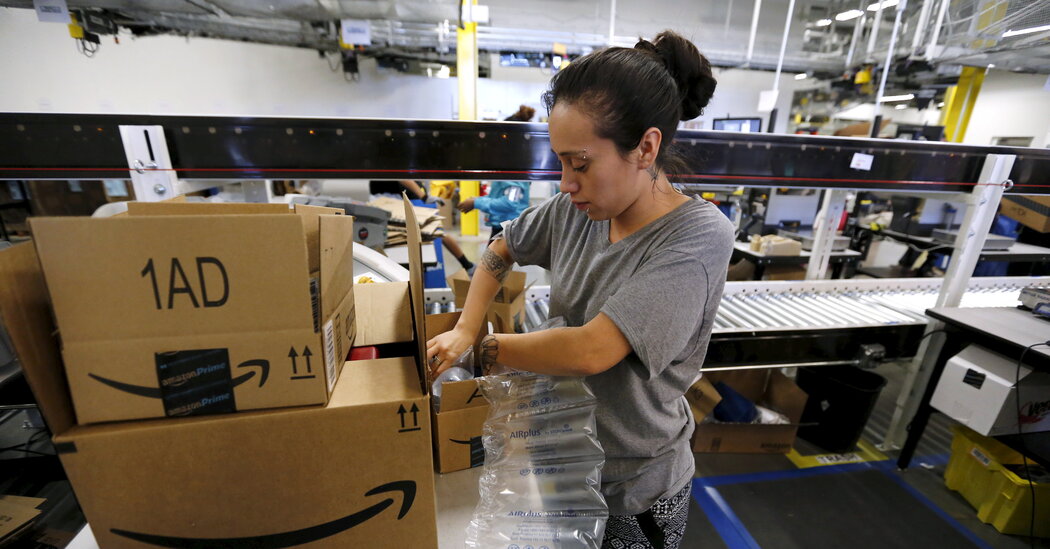
The plastic air pillows that are a familiar feature of Amazon packaging are designed to keep products safe during transport, but billions of them end up in landfills.
Now, under pressure from environmentalists to cut back on its use of plastic packaging, the world's largest online retailer plans to replace all of its fluffy plastic pillows with stuffing made from recycled paper.
Amazon says the effort will prevent the use of about 15 billion air pillows per year in North America. It's the Seattle-based retail giant's “largest plastic packaging reduction initiative” to date, the company said in a news release Thursday.
It's just one of the ways companies are responding to outcry from people and environmental groups over retailers' use of plastic packaging, especially as online shopping has surged.
Ocean conservation group Oceana, which has long been at odds with Amazon over its use of plastics, called the move “good news for the ocean and its customers,” but called for further cuts in single-use packaging, such as padded plastic envelopes, which Amazon continues to use.
The pillow is made from plastic film, which scientists have found to be the most common type of plastic litter in oceans and on the seabed near coastlines. Plastic film can be deadly to wildlife such as sea turtles and seabirds. And unlike paper alternatives, plastic film generally can't be composted or recycled in curbside collection programs.
A recent report from Oceana said that protective packaging such as air pillows now account for more than a third of global e-commerce packaging by weight.
Thursday's announcement covers Amazon's largest market, the United States, as well as Canada and Mexico, which together account for more than 70% of the company's global sales. In those markets, Amazon said it has already replaced about 95% of its plastic pillows with paper ones and is working to phase them out completely by the end of the year.
Amazon said it is phasing out plastic air pillows in Australia and removing nearly all single-use plastic packaging across India and Europe, but those changes have been slower in other parts of the world: Amazon reported a roughly 12% decrease in its use of plastic packaging worldwide in 2022 compared to the previous year.
Environmental and consumer groups are working on multiple fronts to stem the soaring volume of plastic packaging waste. Earlier this year, they pushed a bill in New York state that would cut plastic packaging use by 50 percent over 12 years by forcing manufacturers to find sustainable options or pay a fee.
The bill, which would also ban certain toxic chemicals currently used in packaging, including per- and polyfluoroalkyl compounds, vinyl chloride and formaldehyde, passed the state Senate but was not put to a vote in the state Assembly. Similar bills have also been passed in California, Oregon, Maine and Colorado.
Of course, the tricky question is: What happens to all that extra paper Amazon uses?
Paper is recyclable and biodegradable, making it better than plastic. Yet, according to a 2021 UN report comparing single-use plastics to other forms of packaging, paper's climate impact can vary greatly depending on what's used to pulp it.
And if a paper bag ends up in a landfill, it can biodegrade and contribute to global warming methane pollution, whereas paper is actually more likely to be recycled. And when plastic bags are incinerated, they release toxic chemicals.
Amazon, meanwhile, says it is in the midst of a multiyear plan to eliminate all plastic shipping packaging from its North American fulfillment centers, and the company says one center in Ohio is already plastic-free.
And there's even more good news for shoppers: Amazon said its engineers tested how effective the paper is at protecting items during shipping and found it to be just as effective, or even better, than plastic pillows.
